

How does pet insurance work? Choose the best plan.
Pet insurance works on a reimbursement model — you pay your bill at the vet’s office, submit a claim to your pet insurance provider and get paid back for covered care. With Fetch Pet Insurance, you get the most complete coverage that includes what others charge extra for or don’t cover at all. It’s fast and easy to submit claims, and you’ll get reimbursed up to 90%.
Get your price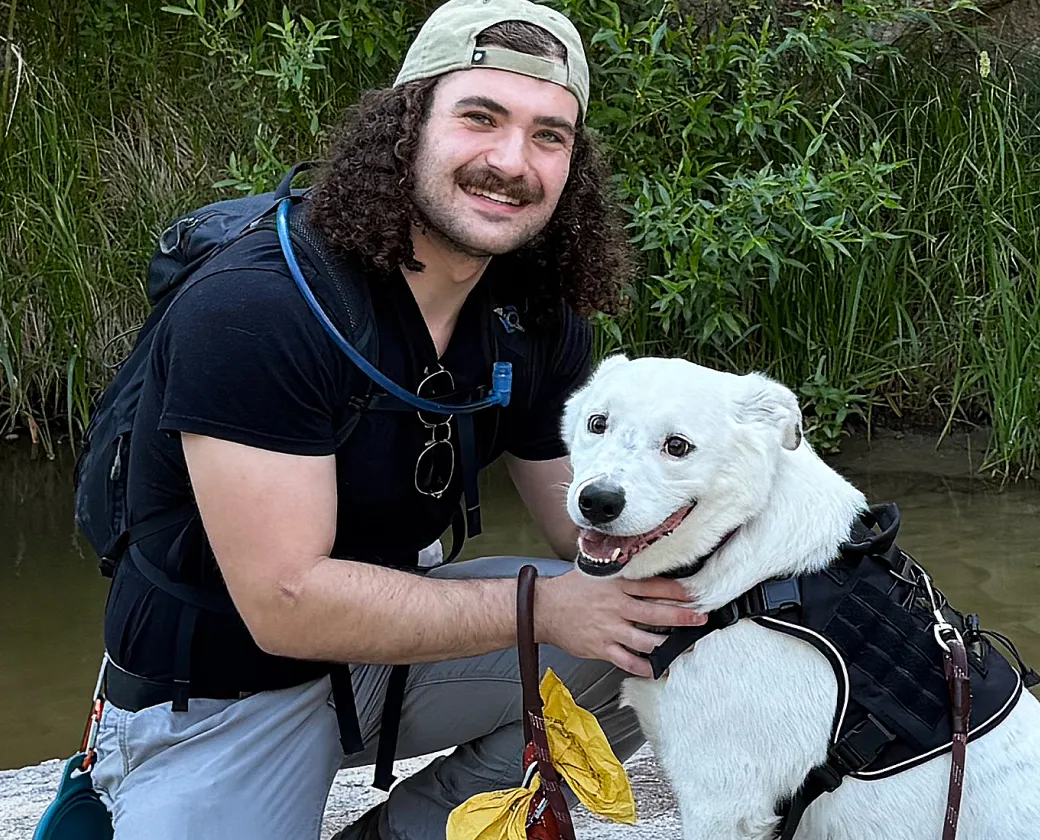
Morgan & Pete
Skin infection costs:
$4,583
Fetch paid back:
$3,301
How pet insurance works: from vet visit to getting paid back
Pet insurance works a bit differently than human health insurance. With pet insurance, you're responsible for paying your entire vet bill upfront, then you file a claim and get reimbursed. There are no insurance cards and no need to check whether your vet takes your insurance because there are no networks. With Fetch Pet’s most complete coverage, you can use any vet in the U.S. or Canada, including specialists and emergency care.
1
You pay the vet first
You pay your pet’s bill in full at the veterinarian’s office during your visit.
2
Submit a claim to get paid back
After you’ve visited the vet and paid your bill, you’ll usually file a claim by sending your invoice and supporting medical records to your provider. With Fetch Pet, submitting a claim is fast and easy using our top-rated app.
3
Get reimbursed — fast
Once your claim is approved and you've met your deductible, your provider pays you back for covered care. Fetch Pet claims are typically processed in less than 10 days. Then you’ll get reimbursed up to 90% straight to your bank account when you set up direct deposit.

Coco Pop & Naomi
Luxating patella costs:
$28,776
Fetch paid back:
$21,331
Deductibles, reimbursement rates & annual limits: how pet insurance pricing works
With most pet insurance, you get an estimated price before signing up — this is called a “quote.” It’s usually determined by your pet’s age, breed and location. With Fetch Pet, you can customize your price to fit your pet and your budget by adjusting your deductible, reimbursement rate and max annual payout. Others, like Trupanion, don’t have this pricing flexibility.
Fetch Pet price customization examples
Here’s how adjusting your reimbursement rate, annual deductible and max annual payout can affect your monthly price.
Reimbursement rate | Deductible | Max annual payout | Price |
|---|---|---|---|
70% | $700 | $5,000 | $22/mo. |
80% | $500 | $10,000 | $29/mo. |
90% | $300 | $15,000 | $42/mo. |
Monthly premiums exclude taxes and fees. Quotes obtained July 28, 2026 for base Accident & Illness plans from Fetch Pet for a 6-week-old old small mixed-breed dog living in 30040 (GA).
Annual deductible
Your deductible is the amount of veterinary care you need to pay for yourself each year before your insurer starts reimbursing you.
Max annual payout
The max annual payout is the maximum dollar amount you can get paid back each year (sometimes this is called an “annual limit” in insurance-speak).
Reimbursement rate
Your reimbursement rate is the percentage of your vet bill that your insurance will cover.

Did you know? Once your deductible has been met, it won’t be taken out of your reimbursements again until it resets the next policy year. This typically occurs after the second or third claim.
Is pet insurance worth it? How to tell if it’s right for you & your pet.
Pet insurance makes your vet bills more affordable and gives you peace of mind that both your pet and your wallet are protected — but every pet and every financial situation is different. There are a few reasons why your dog or cat may not be able to get the most out of having pet insurance coverage. Take a look at these examples of when pet insurance is worth it and when it may not be right for you and your pet.
Pet insurance is worth it when:

Your pet is young and healthy. Puppies and kittens cost less to insure and are more likely to be in good health with no pre-existing conditions. This means they're typically eligible for most — if not all — available coverage.
Your pet has minimal or no pre-existing conditions. You'll get the full benefits of your coverage because any new conditions that develop will be eligible for reimbursement.
You don’t want to compromise your pet’s medical care due to cost. Pet insurance helps you say yes to your vet's recommended treatment without worrying about cost.
Pet insurance may not be worth it when:

You’re signing up a senior pet. Older pets are more expensive to insure and have a higher likelihood of pre-existing health issues that won’t be covered.
Your pet's been treated for several issues before signing up. No pet insurance covers all pre-existing conditions. This means existing issues will likely be ineligible for coverage and reimbursement.
You’re at the vet right now and looking for instant coverage. Any vet visits that took place before signing up or during the waiting period won’t be covered.
How does pricing change for cat insurance vs. dog insurance?
Breed affects the cost of pet insurance, and you may find that dog insurance is generally more expensive than cat insurance. On average, dog parents pay almost twice as much for pet insurance as cat parents do. According to NAPHIA (North American Pet Health Insurance Association), the average cost to insure a dog was $836 in 2025, while the average cost to insure a cat was $435 in the U.S. The reason? Dogs generally need more vet care.
According to the AVMA (American Veterinary Medical Association), dogs visit the vet about twice as often as cats each year, and they're more likely to get routine checkups, too. Dogs are also prone to specific costly conditions like hip dysplasia that are far less common in cats. More vet visits and a higher likelihood of needing expensive treatment means dogs are typically more expensive to insure than cats.
The average monthly pet insurance price with Fetch is $35/mo. for dogs and $22/mo. for cats.

How pre-existing conditions can affect pet insurance coverage
No pet insurance covers all pre-existing conditions. A pre-existing condition is defined as any injury, illness or condition that your pet shows signs or symptoms of either before you enroll in insurance or during the waiting period. Any claims for treatment related to a pre-existing condition will not be covered. This is why it’s crucial to sign up your pet as early as possible, before they need treatment for an injury or illness. While pre-existing conditions affect coverage and reimbursement, they will not affect the price of your pet insurance when you sign up.
Some providers, like Fetch Pet, do cover curable pre-existing conditions. Curable pre-existing conditions are medical conditions that can be completely cured with no recurrence of signs or symptoms. (Think: urinary tract infections, upper respiratory infections, bite wounds and conjunctivitis.) In order for the condition to be considered curable, your pet must go 1 year completely symptom-free from the issue.
Pet insurance waiting periods, explained
Pet insurance has a waiting period between when you sign up and when your vet bills are eligible for getting paid back. Any vet visits that take place prior to, or during the waiting period, will not be eligible for reimbursement. Here’s a look at how waiting periods work with Fetch Pet.

Accidents
There’s no waiting period for accident coverage with Fetch Pet. This means you can start getting reimbursed for accidents that occur the day after you sign up and going forward.

Illnesses
For illness coverage, there’s a waiting period of 15 days with Fetch Pet. The waiting period begins the day after you sign up.

Fetch Wellness
If you add Fetch Wellness to your Accident and Illness pet insurance, there’s no waiting period for preventive coverage. This means you can use it the day after you sign up.

Did you know?
There is usually a 6-12 month waiting period before orthopedic conditions (like hip dysplasia and knee ligament injuries) are eligible for pet insurance coverage. Fetch Pet has a 6-month waiting period for coverage of these issues.
Questions about how pet insurance works, answered
Does pet insurance pay you or the vet?


How does pet insurance work when you go to the vet?
Is pet insurance actually worth it?
What doesn't pet insurance cover?
How does pet insurance work with pre-existing conditions?
What are the downsides of pet insurance?