
Pet insurance in Louisiana for dogs & cats
Get your price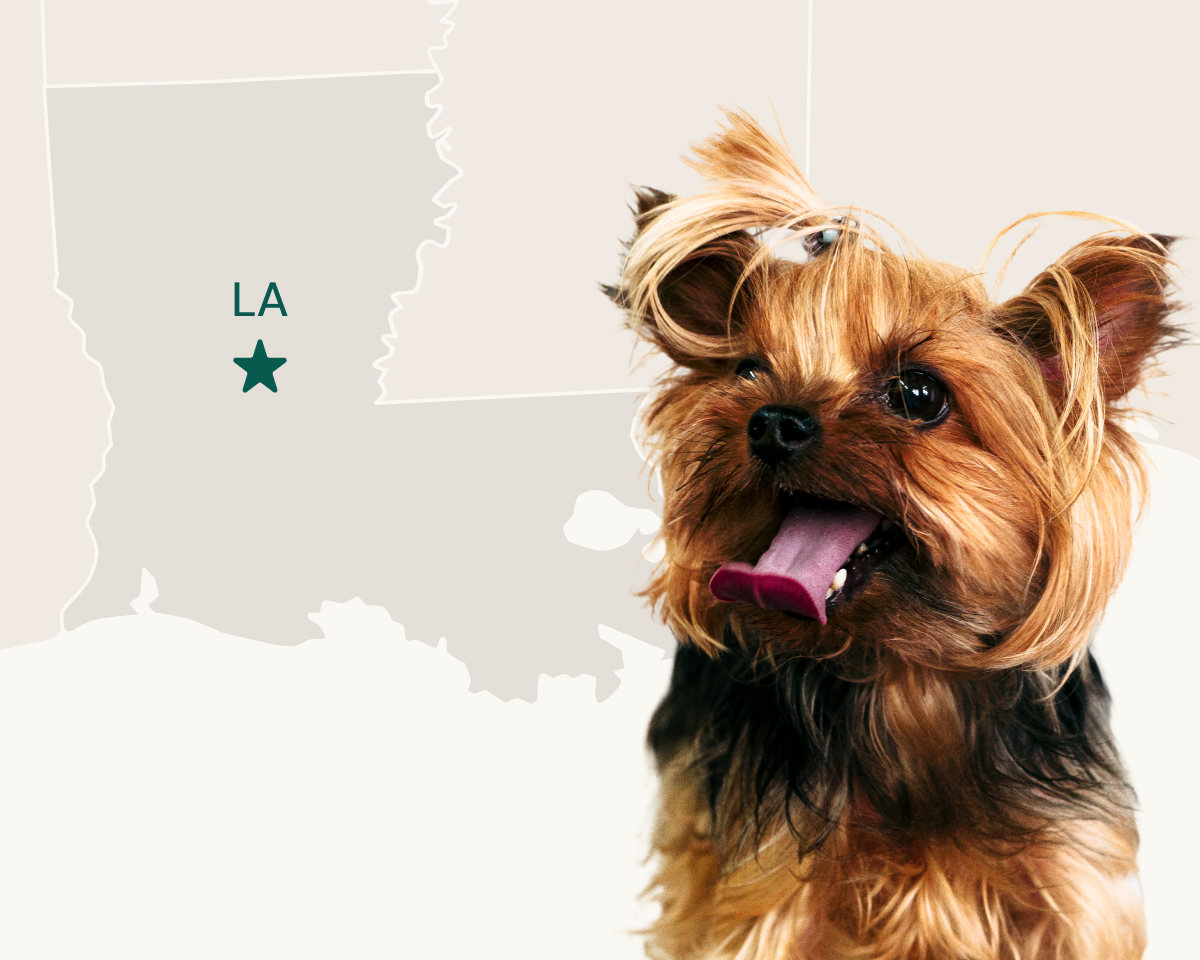
Yorkshire Terrier
Most popular breed in Louisiana
How much does pet insurance cost in Louisiana?
In Louisiana, it costs an average of $30/mo. for dogs and $26/mo. for cats to protect your pet with Fetch Pet Insurance — the most complete coverage. Fetch Pet covers what others charge extra for or don’t cover at all, like dental disease, sick-visit exam fees and behavioral therapy. From lounging on New Orleans patios to bayou boat days near Lafayette, Louisiana is a great place for pets and pet parents to call home. But the state’s heat, humidity and local wildlife like snakes and alligators also pose unique health risks near home and out exploring. Fetch Pet reimburses up to 90% of unexpected vet bills so you’re covered wherever life with your pet takes you in the Pelican State.
Protect your dog or cat with Fetch Pet, Louisiana’s most complete pet insurance
Coverage others exclude or charge extra for comes standard with Fetch Pet, including for dental disease, sick-visit exam fees, behavioral therapy, telehealth and more. This means you’ll be reimbursed up to 90% for common conditions like vomiting and diarrhea, and more serious issues like cancer and broken bones.Whether you live in Baton Rouge, Shreveport, Lake Charles or anywhere else in Louisiana, Fetch Pet makes it more convenient and more affordable to give your pet the best possible care.
Included coverage
Accidents

Emergency vet visits
Hospital stays
Cuts & scratches
Swallowed objects
Broken teeth
Broken bones
Bite wounds
Poisoning
Online vet visits
Illnesses
Sick visits
Vomiting & diarrhea
Skin & ear infections
Cancer treatment
Dental & gum disease
Allergies
Arthritis
Cherry eye
Breed-specific issues
Tests
X-Rays & CT scans
Physical therapy
Surgeries
Ultrasounds
Laboratory tests
Acupuncture & chiropractic care
Treatment for aggression & anxiety
Medications
Accidents, Illnesses & Tests
Emergency vet visits
Hospital stays
Cuts & scratches
Swallowed objects
Broken teeth
Broken bones
Bite wounds
Poisoning
Explore Accident & Illness

Optional coverage
Wellness
Accident and Illness pet insurance doesn’t include preventive care coverage. By adding it, you’ll also get money back for the vet visits that help keep your pet healthy, like:
Annual exams
Vaccinations
Spaying/Neutering
Dental cleanings
Heartworm, flea & tick prevention
Explore preventive add-on
Common pet health risks in Louisiana
Louisiana’s bayous, lakes and warm weather make for great days outdoors with your pet, whether you’re wandering the trails of Kisatchie National Forest, walking the Lake Pontchartrain lakefront or taking a boat out on the Atchafalaya Basin. But all that sunshine and standing water also come with a distinct set of regional health risks. With Fetch Pet, you’ll have coverage for what others charge extra for or don’t cover at all, so your pet (and your wallet) have the most complete protection.
Take a look at what a 90% reimbursement and a $300 deductible looks like in these examples:
What is leptospirosis?
Leptospirosis is a disease caused by leptospira bacteria, which spreads through the urine of infected wildlife. Animals typically contract it after contact with contaminated water or soil, especially after heavy rainfall or flooding. It typically affects dogs and is much rarer in cats.
How leptospirosis affects pets: Symptoms of leptospirosis can include loss of appetite, vomiting, lethargy, abdominal pain, diarrhea, jaundice (yellowing of the skin or eyes), dehydration, drinking or urinating more than usual, weight loss and stiffness or muscle pain. The disease can also lead to kidney or liver failure.

Why pets in Louisiana are at an increased risk
Louisiana gets year-round rain — in fact, New Orleans is one of the wettest cities in the U.S., with an average of 62 inches of rain per year. This can lead to standing water and increased risk of flooding, both of which can contribute to a pet contracting leptospirosis.
Leptospirosis
Fetch pays back: $1,405
Average cost to treat: $1,895

What are venomous snake bites?
Venomous snake bites occur when a snake’s bite releases venom, a substance that can be dangerous to pets and humans. Snakes are more active when temperatures are higher in April to October, according to LSU’s School of Veterinary Medicine, and can bite if they feel threatened by pets who encounter them while exploring or out on walks.
How venomous snake bites affect pets: Symptoms can vary depending on the type of snake but include pain and swelling around the bite area, as well as difficulty breathing, abnormal bleeding, vomiting and diarrhea or seizures. Venomous snake bites require immediate veterinary care and can be life-threatening.
Why pets in Louisiana are at an increased risk
Louisiana is home to 7 types of venomous snakes, per the Department of Wildlife & Fisheries: one of the most common is the Eastern Copperhead, which can be found throughout wooded and forested areas of the state.
Venomous snake bites
Fetch pays back: $921
Average cost to treat: $1,357


What is heatstroke?
Heatstroke is a life-threatening condition that happens when a dog or cat’s body temperature rises to dangerous levels (above 104°F). It occurs when pets get so hot they can’t effectively cool themselves down — which dogs primarily do through panting. Brachycephalic breeds (think: Bulldogs, Pugs and Boxers) are at higher risk of developing heatstroke.
How heatstroke affects pets: Heatstroke or heat-related illness can come on quickly — in as little as 30 minutes —with signs that include heavy panting, bright red or pale gums, vomiting or diarrhea, weakness, disorientation and collapse.
Why pets in Louisiana are at an increased risk
Louisiana’s subtropical climate means summers are hot and humid: in Baton Rouge, for example, temperatures from June to August reach highs in the 90s. This can put pets in Louisiana at increased risk of heat-related emergencies.
Heatstroke
Fetch pays back: $1,388
Average cost to treat: $1,876


What are alligator attacks?
American alligators live in bodies of water throughout Louisiana, including bayous, lakes and coastal marshes. They’ve been known to prey on dogs or cats, so pets should be kept on leashes and a safe distance away from the water’s edge.
How alligator attacks affect pets: An alligator attack can result in bite wounds, lacerations, broken bones, infections and even death.
Why pets in Louisiana are at an increased risk
While alligators are found throughout the southeastern U.S., Louisiana has one of the highest populations of them. There are more than 3 million wild alligators in the state, according to the Louisiana Department of Wildlife & Fisheries. While they’re known to be more active in warmer months, alligators pose a threat to pets year-round.
Alligator attacks
Fetch pays back: $847
Average cost to treat: $1,275

What are tick-borne diseases?
Tick-borne diseases are infections spread through the bite of an infected tick, including ehrlichiosis and Rocky Mountain spotted fever. There are 5 types of disease-spreading ticks found in Louisiana: the Lone Star tick, Gulf Coast tick, American dog tick, brown dog tick and black-legged (or deer) tick.
How tick-borne diseases affect pets: Tick-borne diseases are more common in dogs than cats. Symptoms will vary depending on the type of illness but often include fever, swollen lymph nodes, coughing, loss of appetite, vomiting and diarrhea.
Why pets in Louisiana are at an increased risk
LSU’s College of Agriculture notes that ticks can be a year-round health hazard in Louisiana. The state’s warm climate provides for a long tick season, meaning more chances of exposure for pets who spend time outdoors.
Tick-borne diseases
Fetch pays back: $237
Average cost to treat: $264


Deductible has been met in this example.
What are toxic plants?
Plant toxicity occurs when a dog or cat eats a plant containing substances harmful to their body. Curious pets often explore their environment by chewing, which increases the chances they’ll bite into something they shouldn’t.
How toxic plants affect pets: Depending on the plant, pets may experience symptoms ranging from mild (gastrointestinal issues, like vomiting and diarrhea) to serious (such as breathing problems, seizures and liver or kidney damage).
Why pets in Louisiana are at an increased risk
Some plants are harmful for dogs but not cats, and vice versa: It’s important to know which plants to look out for and when to seek veterinary care. One in particular that Louisiana pet parents should be aware of is sago palms: LSU warns that the plant, popular in Louisiana landscapes, is highly toxic to dogs.
Toxic plants
Fetch pays back: $375
Average cost to treat: $750


The pet insurance claims process for Louisiana pet parents
It’s fast and easy to submit claims and get reimbursed with Fetch Pet.
1
You pay the vet first
You pay your pet’s bill in full at the veterinarian’s office during your visit.
2
Submit a claim to get paid back
Upload a picture of your paid invoice and supporting medical records and submit them in the Fetch Pet Insurance app.
3
Get reimbursed — fast
Claims are typically processed in less than 10 days. Once approved and you’ve met your deductible, get paid back up to 90% straight to your bank account when you set up direct deposit.
With Fetch Wellness, you can get paid back for the preventive care that helps keep your pet healthy in Louisiana
When you sign your pet up for Fetch Pet, you have the option to add a Wellness plan to your pet insurance, so you’ll also get money back for vaccines, annual checkups, preventive oral care, spaying/neutering and more. With coverage for both unexpected and preventive vet care, your pet (and your wallet) will have total protection.
Get your price
Betty Boop & Blair
Fetch Members since 2021
Your Louisiana pet insurance questions, answered
Does Fetch Pet Insurance cover pre-existing conditions in Louisiana?
Fetch Pet doesn’t cover all pre-existing conditions in Louisiana or elsewhere — no pet insurance does. A pre-existing condition is any injury, illness or condition that your pet shows signs or symptoms of either before your coverage begins or during your policy’s illness waiting period. These conditions will be noted in your pet’s veterinary medical records. Any claims for treatment related to a pre-existing condition will not be covered. To learn more, read about pre-existing conditions.
How much is pet insurance for a dog in Louisiana?
In Louisiana, Fetch Pet Insurance for a dog averages $30/mo. Your exact price is based on 3 factors: your dog’s age, their breed and where you live. When you get a quote from Fetch Pet, you can customize your annual deductible, max annual payout and reimbursement rate to fit your pet and your budget. Not all providers give you that flexibility. Dogs can be covered starting at 6+ weeks, with no upper age limits and no restrictions on breed. (The same goes for cats.) Your policy also includes coverage for hereditary and congenital conditions with up to 90% reimbursement.
While others may look less expensive when you’re comparing pet insurance providers, their coverage can end up costing you more than Fetch Pet. Here’s how: Pet insurers like Spot, Pets Best and Lemonade will give you a monthly price that looks low at first. But once you get closer to purchasing, they’ll ask if you want to pay extra to add coverage for dental, behavioral issues and more — coverages that are all part of your Fetch Pet policy by default. Even with those add-ons, you’ll still have less coverage than what comes standard with Fetch Pet.
What is the waiting period for Fetch Pet Insurance in Louisiana?
With Fetch Pet, there’s no waiting period for accident coverage. So if you live in Louisiana, you can be reimbursed for vet visits to treat new injuries that occur the day after you sign up — this is known as your “policy effective date” in insurance-speak. For illness coverage, the waiting period is 15 days. There’s no waiting period for Wellness, if you add it to your policy.
What is a waiting period? A waiting period is the time between when you sign up for pet insurance and when vet visits for new illnesses are eligible for reimbursement. Any signs or symptoms of a condition that are noted in your pet’s veterinary records as well as any vet visits that take place prior to, or during the waiting period, will be considered a pre-existing condition and will not be covered.
Does Fetch Pet cover dental disease for pets in Louisiana?
Yes, Fetch Pet covers dental disease for pets across the U.S. and Canada, including in Louisiana, and was named the “Best Pet Insurance for Dental Coverage” by Forbes in 2026. Fetch Pet’s complete coverage also includes dental injuries and diseases in every adult tooth, plus gums. Other providers only cover specific teeth or provide no coverage for dental disease. Periodontal disease is the most common disease in dogs and cats (up to 90% of pets get it), so having full-mouth dental coverage is crucial for giving your pet their longest, healthiest life.
What are the biggest pet health risks in Louisiana?
Louisiana’s warm and humid summers, abundance of waterways and local wildlife can expose pets to a variety of health risks. The state is home to a large population of alligators in its lakes and bayous, which could attack curious or unsuspecting pets if they get too close. Venomous snakes and ticks are also cause for concern, while contaminated water or soil after heavy rains may put pets in contact with the harmful bacteria that causes leptospirosis. And Louisiana’s hot temperatures can put pets at risk for heat-related illnesses like heatstroke. Fetch Pet covers conditions caused by these risks, reimbursing up to 90% of treatment costs.
Are there Louisiana laws that pet parents should be aware of?
Yes, Louisiana, like many states, has laws regarding rabies vaccinations and the responsible treatment of pets. To learn more about regulations regarding dogs and cats in the state, you can visit the Louisiana State Legislature’s website. Many cities and parishes also have their own pet-specific laws, so it’s important to check the local animal control regulations for where you live.
Is pet insurance in Louisiana worth it?
Yes, pet insurance is worth it in Louisiana. If you live in the state and sign your dog or cat up for Fetch Pet, they’ll have the most complete coverage for when they get sick (think: vomiting, allergies or ear infections) or hurt (think: broken bones, scratches or poisoning), and you’ll get reimbursed for up to 90% of their vet bills. Having Fetch Pet gives you peace of mind for your pet and your wallet.
Pets living in Louisiana are prone to local risks, including heatstroke and alligator attacks. Fetch Pet covers treatment for these conditions and more at any vet in the Pelican State — or anywhere else in the U.S. and Canada, including emergency vets and specialists.
How does Fetch Pet Insurance compare to other pet insurance in Louisiana?
When it comes to protecting new puppies and kittens, Fetch Pet has the best pet insurance at the best price in Louisiana. Fetch Pet has the most complete coverage, including full-mouth dental, sick-visit exam fees, behavioral therapy and more — at no added cost. Other providers limit, charge extra for or entirely exclude those same benefits. If you’re looking to adopt, Fetch Pet is the #1 pet insurance for shelter and rescue pets, partnering with 85+ shelter and rescue organizations. It’s easy to see why Fetch Pet was voted the #1 Best Pet Insurance in the 2026 Newsweek Readers’ Choice Awards. When you choose Fetch Pet, you’re choosing coverage trusted by vet experts, animal welfare organizations and pet parents alike to protect over 600,000 cats and dogs.
Does Fetch Pet Insurance offer wellness plans in Louisiana?
Yes, Fetch Pet Insurance offers wellness plans in Louisiana. You can choose between 3 different Fetch Wellness plans, so it’s easy to find one that fits your pet and your budget best. When you add Fetch Wellness to your Accident and Illness pet insurance policy, you’ll also get coverage for the preventive care that helps keep your pet healthy, including:
- Annual exams
- Preventive oral care
- Vaccines
- Spay/neuter
- Heartworm, flea and tick prevention
- And more!