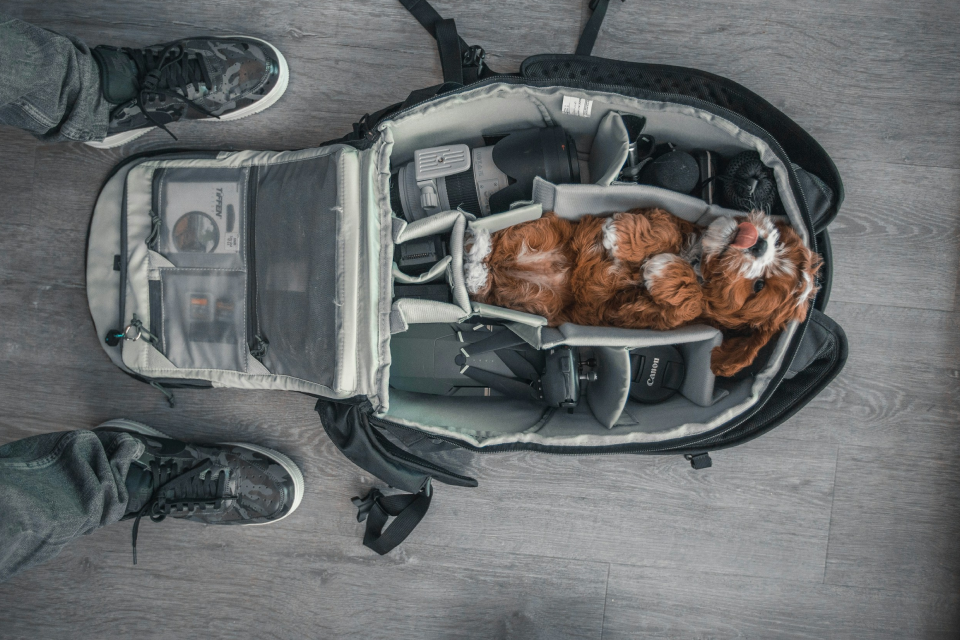
Flying with your dog doesn't have to be stressful — but it does require planning. Whether you're relocating across the country or taking your pup on vacation, understanding airline policies and preparation steps can make all the difference. Most major U.S. airlines welcome dogs on board, though the rules vary depending on your dog's size, breed and whether they're traveling in the cabin or cargo.
Small dogs can typically fly in the cabin with you on most major airlines including American, Delta, United, Southwest and Alaska. Your dog needs to fit comfortably in an airline-approved carrier that slides under the seat in front of you — and the combined weight of your dog and carrier usually can't exceed 20 pounds.
Airlines limit the number of pets allowed in each cabin, so you'll need to reserve your dog's spot when booking your ticket. The carrier counts as either your carry-on bag or personal item, depending on the airline.
"Dogs traveling in the cabin need to stay in their carriers for the entire flight, including during boarding and deplaning," Dr. Aliya McCullough, Fetch's Chief Veterinary Officer, explains. "This helps keep them safe and reduces stress for both pets and other passengers."
Your dog carrier for airplane travel must fit completely under the seat, which typically means maximum dimensions around 18 inches long, 11 inches wide and 11 inches high — though exact measurements vary by airline and aircraft type. The carrier needs to be well-ventilated, leak-proof and secure enough that your dog can't escape.
Soft-sided carriers work best for cabin travel since they can compress slightly to fit tight spaces. Your dog should be able to stand up, turn around and lie down comfortably inside. Many pet parents find it helpful to practice with the carrier at home before flying, letting their dog get comfortable spending time inside.
Airline pet fees typically range from $100 to $150 each way for cabin travel. These fees are per pet, not per carrier, and they're separate from your ticket price.
For dogs traveling in cargo, costs can range from $200 to over $1,000 depending on your dog's size, the distance traveled and the airline's pricing structure. International flights often cost significantly more due to additional handling and documentation requirements.
At the security checkpoint, you'll need to remove your dog from their carrier and carry them (or walk them with a leash) through the metal detector while the empty carrier goes through the X-ray machine.
TSA agents are trained to handle pet screening efficiently, but arriving early gives you extra time in case your dog needs a moment to settle. Some airports have designated pet relief areas past security, which can be helpful for longer layovers.
Unfortunately, most airlines won’t allow you to purchase an extra seat for your dog on commercial flights. Dogs must either travel in an approved carrier under the seat or in the cargo hold. Even if you're willing to buy an additional ticket, airlines don't allow pets to occupy passenger seats for safety and hygiene reasons.
The only exception is for service dogs, which can sit on the floor at their handler's feet without being in a carrier. Service dogs fly free of charge in some cases but require specific documentation and advance notification to the airline.


Larger dogs that exceed cabin weight limits travel in the climate-controlled cargo area in an airline-approved crate. Your dog's crate must be large enough for them to stand, sit, turn around and lie down comfortably. It also needs proper ventilation, secure latches and absorbent bedding.
Certain breeds, particularly snub-nosed dogs like Bulldogs and Pugs, are often restricted from cargo travel entirely due to breathing concerns at high altitudes.
For domestic flights, you'll typically need a health certificate from your veterinarian issued within 10 days of travel. Some states have additional requirements, so check both your departure and arrival locations.
International travel requires more extensive documentation. Most countries require USDA-endorsed health certificates, proof of rabies vaccination and sometimes rabies titer tests. As of August 2024, all dogs entering the United States must be at least 6 months old, microchipped and appear healthy. Dogs from high-risk rabies countries need additional CDC certification.
"Getting your dog's travel documents in order early prevents last-minute stress," Dr. McCullough shares. "Schedule a vet visit at least a month before international travel to ensure you have time for any required tests or waiting periods."
Many airlines restrict brachycephalic breeds (pups with short, wide heads that can give them a "flat-faced" appearance) from cargo travel due to their increased risk of breathing problems at altitude. This includes breeds like French Bulldogs, Boston Terriers, Pugs, Boxers and Shih Tzus. Some airlines extend these restrictions to cabin travel as well.
Preparation makes all the difference when flying with your dog. Book direct flights when possible to minimize stress and reduce the risk of missed connections. Exercise your dog before heading to the airport — a tired dog is generally a calmer traveler.
Skip feeding your dog for 4-6 hours before the flight to prevent motion sickness, but make sure they're well-hydrated. Freeze a small dish of water in their carrier the night before travel; it'll melt slowly during the journey, providing water without spilling.
Pack essentials in your carry-on including vaccination records, a leash, waste bags and any medications your dog needs. Having familiar items like a favorite toy or blanket that smells like home can also help keep your dog calm during the journey.
Flying with your dog requires careful planning, but millions of pets travel safely by air each year. Start preparing early — research your airline's specific pet policies, book your dog's reservation when you book your ticket, and schedule that vet visit for health certificates.
Happy travels to you and your pup!
The Dig, Fetch Pet Insurance's expert-backed editorial, answers all of the questions you forget to ask your vet or are too embarrassed to ask at the dog park. We help make sure you and your best friend have more good days, but we’re there on bad days, too.
Save up to 90% on unexpected vet bills
Use any veterinarian in the U.S. or Canada
Rated 'Excellent' on Trustpilot
The most comprehensive pet insurance


up to 90% of vet bills – covered.
Every 6 seconds, a pet parent gets a $1000+ vet bill. Care for your pet & your wallet with Fetch.
Get your price